
Most people think a credit card is simply a plastic trap designed to cause debt. In reality, grasping the true credit card meaning reveals a powerful financial tool that actually pays you to shop. Industry data reveals that when consumers ask exactly what is credit card financing and learn the underlying mechanics, they often stop paying interest entirely.
To avoid paying extra for groceries, you must understand two essential rules. First is the “grace period”—a specific time window where you borrow money absolutely free before banks charge interest. This connects directly to “revolving credit,” meaning your available borrowing limit instantly replenishes the moment you pay your balance. According to common bank standards, securing credit card full information helps you utilize these built-in features strategically rather than falling into the minimum payment cycle.
Navigating monthly statements shouldn’t feel like deciphering a foreign legal contract. This guide translates complicated bank jargon into plain English, providing the exact strategies needed to protect your wallet. By mastering these simple terms and conditions, you will confidently win the credit game.
Credit vs. Debit: Why the Right Choice Protects Your Checking Account
Reaching for the right plastic at checkout determines if your checking account is safe from scammers. To define credit card mechanics simply, think of it as a short-term loan. A debit card is a direct pipeline to your cash, but when you use a credit card in banking, you are spending the bank’s money as a protective shield.
The critical differences between credit and debit cards involve three practical benefits:
- Source of Funds: Debit drains your checking account instantly; credit bills you later.
- Liability Protection: Credit cards offer zero-liability fraud shields. If a scammer strikes, the bank’s money is tied up, not your rent money.
- Credit Reporting: Paying a credit bill builds your score; debit history is ignored.
Because you are borrowing these funds, the bank will ask for repayment. Managing this process safely starts with understanding the anatomy of your credit card statement: decoding the fine print.
The Anatomy of Your Credit Card Statement: Decoding the Fine Print
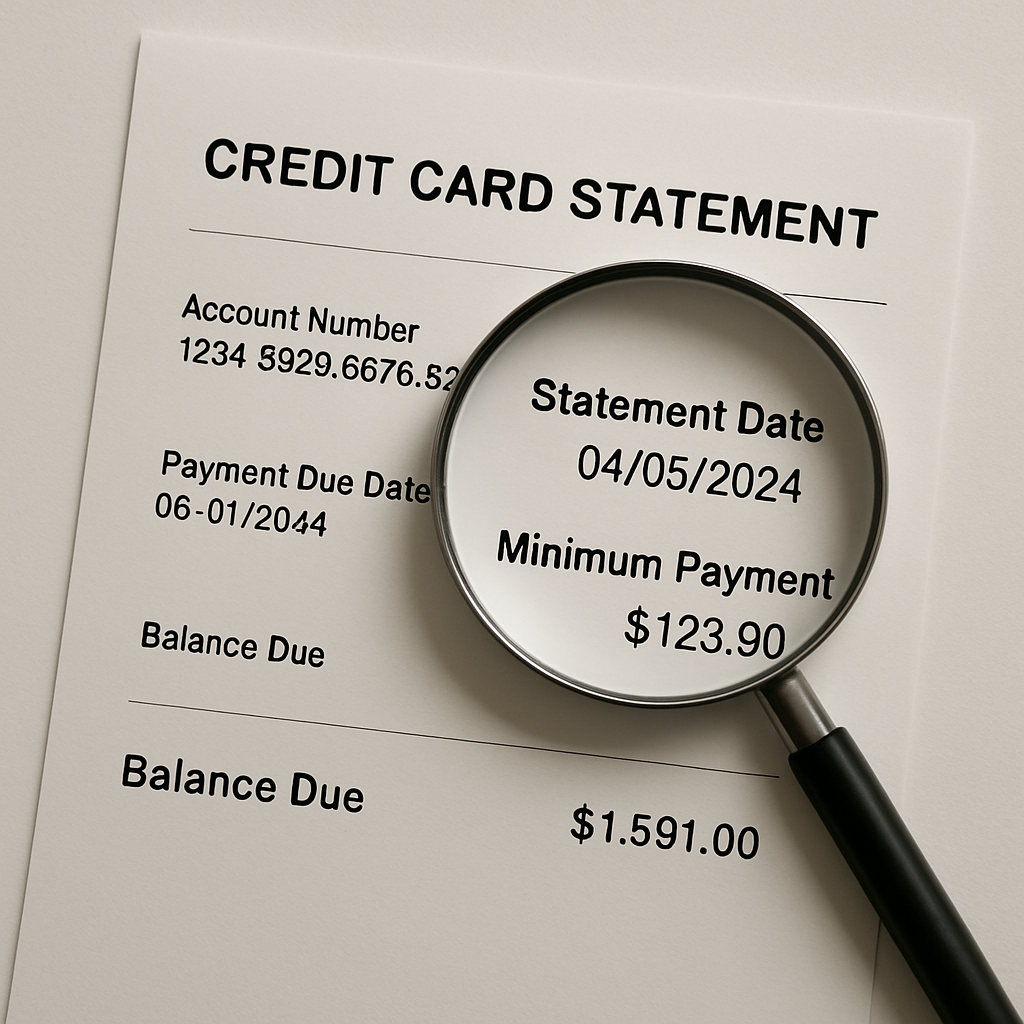
Reviewing your monthly bill can feel overwhelming, but a five-minute monthly audit keeps your wallet protected. Simply review your basic credit card information each month to spot unfamiliar merchant names or unexpected fees quickly.
Getting your credit card billing cycle explained requires mastering two confusing terms: the statement closing date and the payment due date. Think of the statement date as a camera flash capturing your total balance for a specific 30-day window. Purchases settling after this moment—known as the transaction post date—automatically move to next month’s bill. Your due date, which arrives a few weeks later, is simply the firm deadline to pay that specific captured snapshot balance.
Locating the “interest charged” box reveals the true cost of borrowing, which is crucial when having your credit card statement line items explained. This specific section shows the financial penalty for carrying a balance past your due date. To keep that interest charge at absolute zero, you must understand how banks measure time.
Mastering the Grace Period: How to Borrow Money for $0 in Interest
When wondering how credit cards work, most people assume borrowing comes with immediate fees. In reality, you can use the bank’s money for everyday purchases without paying a single cent extra. This financial magic happens inside a protected window of time.
By law, banks provide at least 21 days between your statement closing date and payment due date. This timeline gives us the practical credit card grace period definition: an interest-free zone where you repay exactly what you borrowed. Buy something on day one of a new cycle, and you could actually get nearly 50 days of free borrowing before that specific bill is due.
Unfortunately, this perk requires a strict condition that frequently traps unsuspecting shoppers. If you only make the minimum payment and carry a balance into the next month, your grace period vanishes instantly. You then get hit with residual interest, meaning the bank starts charging daily fees on all new purchases the very moment you swipe your card.
Understanding exactly how a credit card works after losing this interest-free shield is essential for protecting your wallet. Once those daily charges begin, you must understand how fast that debt actually grows.
APR Demystified: The Real Cost of ‘Renting’ the Bank’s Money
Mastering your statement starts with understanding the annual percentage rate (APR). Think of APR as the price you pay for “renting” the bank’s money when you carry a balance. You can find this exact rental rate printed in a standardized table called the Schumer Box, usually located on the back of your card agreement.
While the number looks like a yearly fee—say, 20%—the reality of how credit card interest is calculated is much faster. Banks divide your APR by 365 to get a “Daily Periodic Rate.” This means on a $1,000 balance, you are charged about 55 cents every single day you wait to pay. Furthermore, not all renting costs the same; pulling cash from an ATM (a cash advance) instantly triggers a much higher APR with no grace period at all.
Your specific rate isn’t random; lenders determine it based on three main factors:
- Credit score: Higher scores unlock lower rates.
- Card type: Rewards cards typically charge higher interest.
- Market prime rates: Bank rates fluctuate with the national economy.
When those daily charges start piling up, many people rely on the smallest allowable contribution, which leads directly to the minimum payment trap.
The Minimum Payment Trap: Why Small Payments Lead to Large Debts
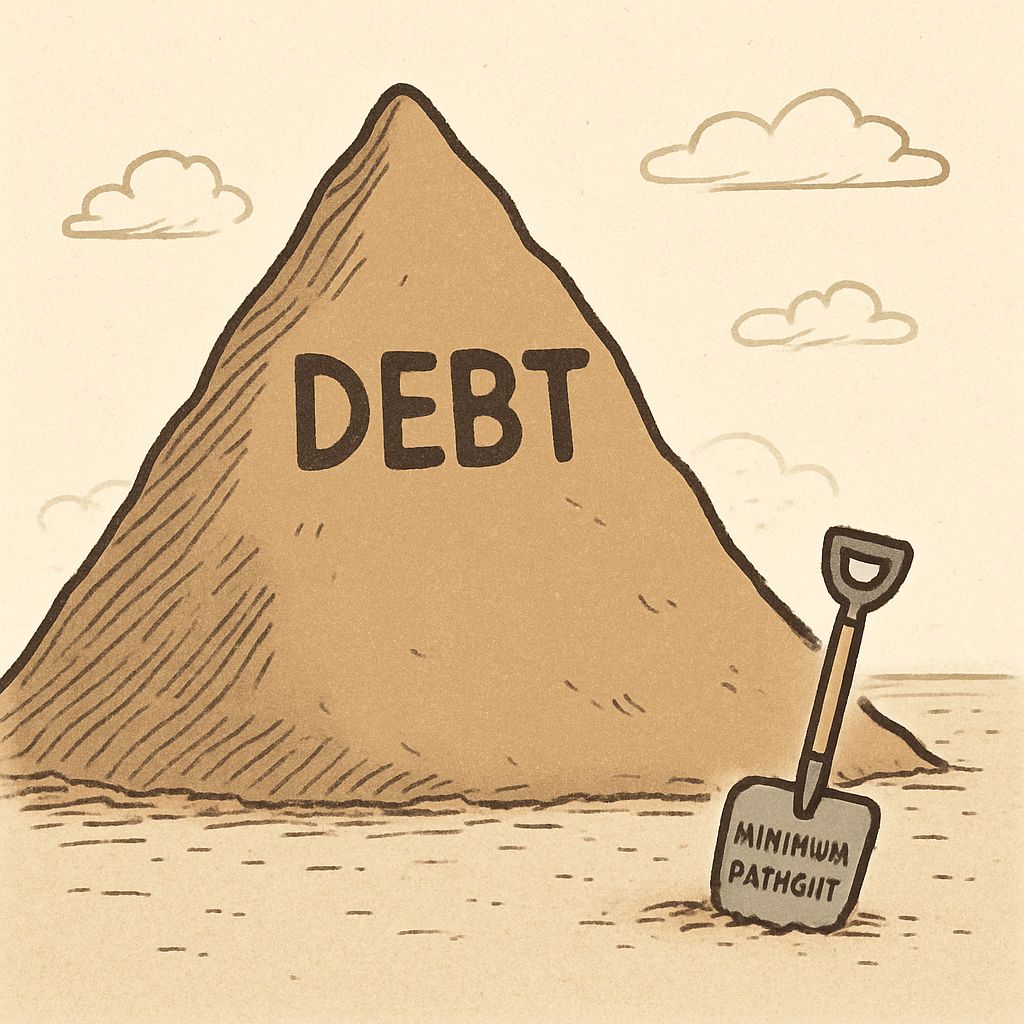
Seeing a $35 minimum due on a $1,000 credit card bill might feel like a relief, but it is actually a carefully designed trap. When you only pay that tiny required amount, the daily interest we discussed earlier eats up almost the entire payment. In some extreme cases, your payment doesn’t even cover the interest charged, causing your balance to grow despite paying—a dangerous “interest snowball” known as negative amortization.
If you keep chipping away at that $1,000 balance with just $35 a month at a 20% APR, it will take you over three years and cost you nearly $400 in extra interest. Worse, carrying that high balance hurts your credit utilization ratio, which is simply the percentage of your total credit limit you are actively using. Even if you never miss a due date, maxing out your card makes lenders view you as risky, dragging down your score.
To avoid these severe minimum monthly payment consequences, always aim to pay your balance in full or send whatever extra cash you can afford. Mastering this habit is the absolute secret to building credit score with a credit card effectively, turning a potential debt trap into a financial stepping stone. If you are struggling to get approved for standard accounts to start this journey, an alternative solution is available.
Secured vs. Unsecured Cards: Choosing the Right Tool for Your Credit Score
Getting approved for standard “unsecured” credit cards relies entirely on a bank’s trust in your financial history. If your credit is damaged or non-existent, you might feel temporarily locked out of the system. Enter the secured card. This alternative requires a refundable cash deposit that acts as collateral—a safety net the bank keeps only if you stop paying your bill. Typically, this cash serves as one of the primary maximum credit limit determination factors; if you deposit $200, your spending limit is exactly $200.
When evaluating secured vs unsecured credit cards for your wallet, you should weigh these core tradeoffs:
- Pro: Near-guaranteed approval allows you to instantly start building or resetting your credit score.
- Con: You must lock up your own cash as an upfront deposit.
After several months of on-time payments, banks will notice your reliability. You can then request credit graduation, which simply means upgrading to a traditional trust-based card and getting your deposit refunded. Securing the right card for your lifestyle opens the door to maximizing its ongoing benefits.
Fees, Fraud, and Freebies: Getting the Most Out of Every Swipe
Thinking a credit card only costs what you spend is a common trap. You can learn how to avoid credit card fees by side-stepping the big three: late fees (set up autopay), annual fees (choose free cards), and cash advance fees (never use your card at an ATM).
Next, maximize value by matching credit card rewards and cashback programs to your actual daily habits, like grocery shopping. Beyond points, verify if your card includes these four hidden benefits:
- Extended warranty
- Rental car insurance
- Fraud alerts
- Cashback
Understanding your credit card fraud protection features makes online shopping completely stress-free. If hackers strike, zero-liability protection ensures you aren’t responsible for paying those unauthorized charges. You can even generate virtual card numbers—temporary digital details that keep your real card hidden from merchants. With your wallet protected and perks optimized, the next step is securing approval.
Your Roadmap to Approval: How to Apply and Set Your Limit
When choosing the right credit card for your needs, use a bank’s “pre-qualification” tool first. This triggers a soft inquiry—a background check that protects your credit score. Official applications cause hard inquiries, which temporarily lower your score.
Moving forward with how to apply for a first credit card requires three key details: your identification, employment status, and gross annual income. Lenders use these numbers to calculate your debt-to-income ratio—comparing your earnings against existing debts—to assign a safe starting limit.
Should that initial limit feel restrictive, simply wait. After six months of on-time payments, you can usually request a limit increase online. Securing this extra borrowing capacity gives you the foundation needed to master your credit.
Your 3-Step Plan to Master Credit and Build Wealth
Reviewing your statement no longer needs to feel intimidating. By understanding exactly how credit cards work, you have transformed a potential debt trap into a manageable financial tool. You now possess the confidence to leverage grace periods instead of fearing minimum payments.
Turn this credit card full information into immediate action by adopting the Golden Rules checklist:
- Autopay setup: Automate your full statement balance payments to easily avoid late fees.
- 30% utilization rule: Keep your total balance low to actively build your credit score.
- Monthly statement audit: Review your charges regularly to catch errors and hidden subscriptions.
You are now firmly in the driver’s seat. Automating your payments and keeping your balance low ensures you maximize the benefits of your card without paying unnecessary interest fees, laying a solid foundation for your long-term financial health.