
A savings account is a fundamental financial tool. It helps individuals manage their money effectively. But what exactly is a savings account?
In simple terms, it’s a deposit account at a bank or credit union. It offers a modest interest rate on the money you save.
Savings accounts are designed for funds you don’t need right away. They provide a safe place to store money while earning interest over time.
Understanding how savings accounts work can enhance your financial literacy. It can also help you make informed decisions about your money.
This guide will explore the basics of savings accounts. We’ll cover their benefits, types, and how to choose the right one for you.
What Is a Savings Account?
A savings account is a cornerstone of personal finance. It is a deposit account held at a financial institution. These accounts are intended to store funds securely while earning interest over time.
Unlike checking accounts, savings accounts typically limit withdrawals. This encourages saving rather than spending the stored funds. Account holders can usually make limited transactions per month.

Banks and credit unions offer various savings account types. Each may come with different terms, interest rates, and minimum balance requirements. Some are designed for specific goals or demographics.
Key features of a savings account include:
- Modest interest rates
- Federal insurance for security
- Limited monthly transactions
Savings accounts are essential for anyone looking to manage their finances better. They offer a straightforward way to earn interest on funds you don’t need immediately. As a low-risk option, they provide both security and flexibility, making them ideal for short-term goals or emergency funds.
Savings Account Definition and Key Features
A savings account is a financial instrument designed for accumulating funds. It provides a safe place for your money, while simultaneously earning interest.
These accounts are widely used for various financial objectives. Building an emergency fund is a common goal. Saving for short-term goals, like vacations or large purchases, is also popular.
Banks and credit unions generally offer savings accounts with Federal Deposit Insurance Corporation (FDIC) or National Credit Union Administration (NCUA) insurance. This protection covers deposits up to $250,000, enhancing the account’s safety.
Here are some key features of savings accounts:
- Competitive interest rates
- Federal insurance up to a specific limit
- Minimal risk and secure deposits
A savings account offers more than just a means to store extra funds. It is an essential tool for financial stability. Choosing the right savings account involves comparing interest rates, fees, and features to find the one that best suits your needs.
How Does a Savings Account Work?
Understanding the workings of a savings account is essential for effective financial planning. At its core, a savings account is quite straightforward and user-friendly. You deposit your money into the account, where it remains secure and accumulates interest over time.
Interest rates on savings accounts can fluctuate depending on the institution and broader economic conditions. Typically, banks calculate interest daily and credit it monthly, allowing your money to grow consistently.
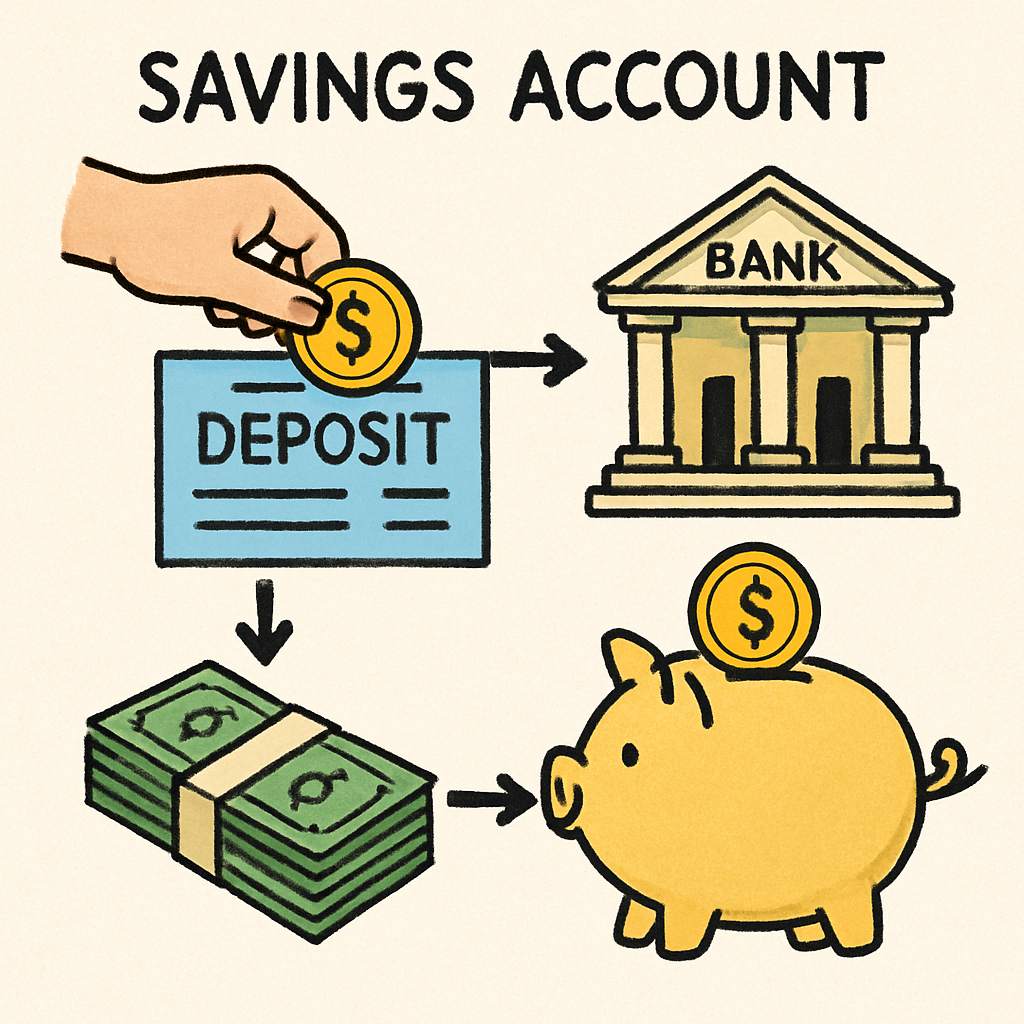
Savings accounts offer flexibility, enabling you to access funds when necessary. Despite this accessibility, some limitations exist. Many savings accounts restrict the number of withdrawals per month, encouraging you to keep your money in the account longer.
To optimize your account, consider these factors:
- Interest rate
- Account fees and minimum balance requirements
- Withdrawal and transfer policies
In summary, a savings account is an efficient way to grow funds safely over time. By understanding its features and constraints, you can maximize its benefits for your financial future.
What Is the Benefit of a Savings Account?
Savings accounts offer several significant benefits that support personal financial stability. Primarily, they provide a secure space for your funds, protected by insurance. Most banks insure accounts up to $250,000, giving peace of mind against potential losses.
Interest on savings accounts allows your money to grow steadily without demanding active investment strategies. This passive income generation is ideal for individuals seeking a low-risk option for their savings.
Moreover, savings accounts contribute to improved financial discipline. By setting aside funds in a savings account, you create a buffer for emergencies or specific goals. These goals could range from vacations to purchasing a home.
Consider these additional benefits:
- Liquidity: Access money when needed
- Separate funds for different purposes
- Encourage regular saving habits
In essence, savings accounts are a reliable and flexible tool for anyone aiming to build financial security and meet targeted financial goals.
What Is an Advantage of a Savings Account?
One of the most appealing advantages of a savings account is its low-risk nature. Unlike stocks or mutual funds, savings accounts are not subject to market fluctuations. This stability makes them an ideal choice for individuals who prefer secure investments.
In addition to safety, the easy accessibility of funds is a notable benefit. Many savings accounts allow instant access to funds through ATMs, mobile, or online banking. This ensures that your money is available when you need it.
Consider these distinct advantages:
- Protection against market volatility
- Instant fund access for emergencies
- Secure and steady interest accrual
Overall, savings accounts offer a blend of security, accessibility, and stability that other investment options often lack.
Different Types of Savings Accounts
Savings accounts come in various forms, each with unique features. Understanding these differences can help you choose the best option for your needs. The major types include traditional savings accounts, high-yield savings accounts, money market accounts, and online savings accounts.
Traditional savings accounts are widely available at most banks and credit unions. They offer standard interest rates and easy access to funds. However, online savings accounts often provide better rates due to reduced overhead costs.
High-yield savings accounts offer a higher interest rate than traditional ones. They may require a higher minimum balance but reward you with more interest over time.
Money market accounts combine features of savings and checking accounts. They typically offer higher interest rates and allow limited check-writing capabilities.
Each type of account serves different purposes. Consider your financial goals and needs to choose the most suitable option. Remember to compare interest rates, fees, and terms across banks.
Traditional Savings Account Description
Traditional savings accounts are the most basic form of savings accounts offered by banks and credit unions. They provide a secure place to store funds while earning modest interest. These accounts are insured by the FDIC, ensuring the safety of your deposits.
Key features of a traditional savings account include:
- Insured deposits up to $250,000
- Basic interest rates
- Easy access to funds
Despite lower returns, traditional savings accounts are a reliable choice for those prioritizing safety over high yields.
High-Yield, Money Market, and Online Savings Accounts
High-yield savings accounts stand out for offering substantially higher interest rates. However, they often come with stricter requirements like higher balances. For those who maintain larger savings, these accounts can significantly boost earnings.
Money market accounts offer a compelling mix of features. They provide favorable interest rates and include limited check-writing and debit card options, blurring the lines between savings and checking accounts.
Online savings accounts are gaining popularity due to their attractive interest rates. With no physical branches, banks save on overhead costs and pass those savings to customers.
Different types of savings accounts include:
- Higher returns on high-yield accounts
- Flexible access with money market accounts
- Competitive rates in online savings
These options allow savers to find a fitting account that meets their financial goals and lifestyle preferences.
by LSE Library (https://unsplash.com/@londonschoolofeconomics)
How to Choose the Right Savings Account
Selecting the best savings account depends on your personal goals. First, assess what you need most from an account, such as high interest or easy access. Different accounts suit different preferences and objectives.
Research is key. Compare interest rates, fees, and terms across various banks. Some accounts may offer better features, like no monthly fees or easy online access. Look at the details closely to make a smart decision.
Consider these factors when choosing a savings account:
- Interest rates and fees
- Minimum balance requirements
- Accessibility and convenience
- Additional features and bonuses
Making an informed choice can maximize your savings potential and align with your financial strategy.
Common Uses for Savings Accounts
Savings accounts serve as a versatile financial tool for various needs. They provide a reliable space to park funds temporarily, before large purchases or investments. Many individuals use them to save for specific goals or upcoming expenses.
Here are a few common uses for savings accounts:
- Building an emergency fund
- Saving for a vacation or a down payment
- Setting aside money for educational expenses or family events
Using a savings account effectively can enhance financial stability and prepare you for future opportunities.
Tips for Maximizing Your Savings Account
Maximizing your savings account involves strategic planning and discipline. Start by setting clear savings goals, which can help keep you motivated. Regular contributions, even small ones, will accumulate over time.
Consider these tips to get the most from your savings account:
- Compare interest rates and choose high-yield accounts
- Set up automatic transfers to ensure consistent savings
- Monitor account fees and maintain required balances
By implementing these strategies, you can steadily build your savings and achieve financial peace.
Conclusion: Building a Strong Financial Foundation
Savings accounts are fundamental to financial security. They offer safety, growth, and flexibility, helping you reach your financial goals. By choosing the right a