
Sending a child to college is an incredibly proud milestone for any family, but it frequently brings a wave of financial anxiety. When scholarships, grants, and your child’s own borrowing limits fall short of the total tuition bill, parents often find themselves looking for a financial safety net. For millions of families, that safety net is the parent plus loan.
Navigating the world of higher education financing can feel like learning a foreign language. Understanding the rules, repayment plans, and application procedures is critical to ensuring you don’t compromise your own financial future while investing in your child’s education. This comprehensive guide will walk you through exactly what these loans are, how to apply, and the strategies you can use to manage your debt effectively.

What is a Federal Parent PLUS Loan?
A federal parent plus loan is a specific type of student loan issued directly by the U.S. Department of Education. Unlike traditional undergraduate student loans where the child assumes the legal responsibility to repay the debt, these education loans for parents place the financial obligation entirely on you, the parent.
If you are wondering, how does a parent plus loan work?, the premise is relatively straightforward. Eligible biological or adoptive parents (and sometimes stepparents) can borrow money directly from the federal government to pay for their child’s educational expenses. The funds are sent directly to the college or university to cover tuition, room, board, and other school-approved fees. Any remaining balance is then refunded to the parent (or the student, if you authorize it) to be used for textbooks, supplies, and off-campus living expenses.
While there are many types of parent student loans available on the private market, the federal option offers unique protections, fixed interest rates, and specific repayment flexibilities that private lenders rarely match.
First Steps: How to Apply for Parent Loans
Securing college loans for parents is a process that begins well before the tuition bill arrives. Here is a step-by-step breakdown of the application process.
1. Submit the FAFSA
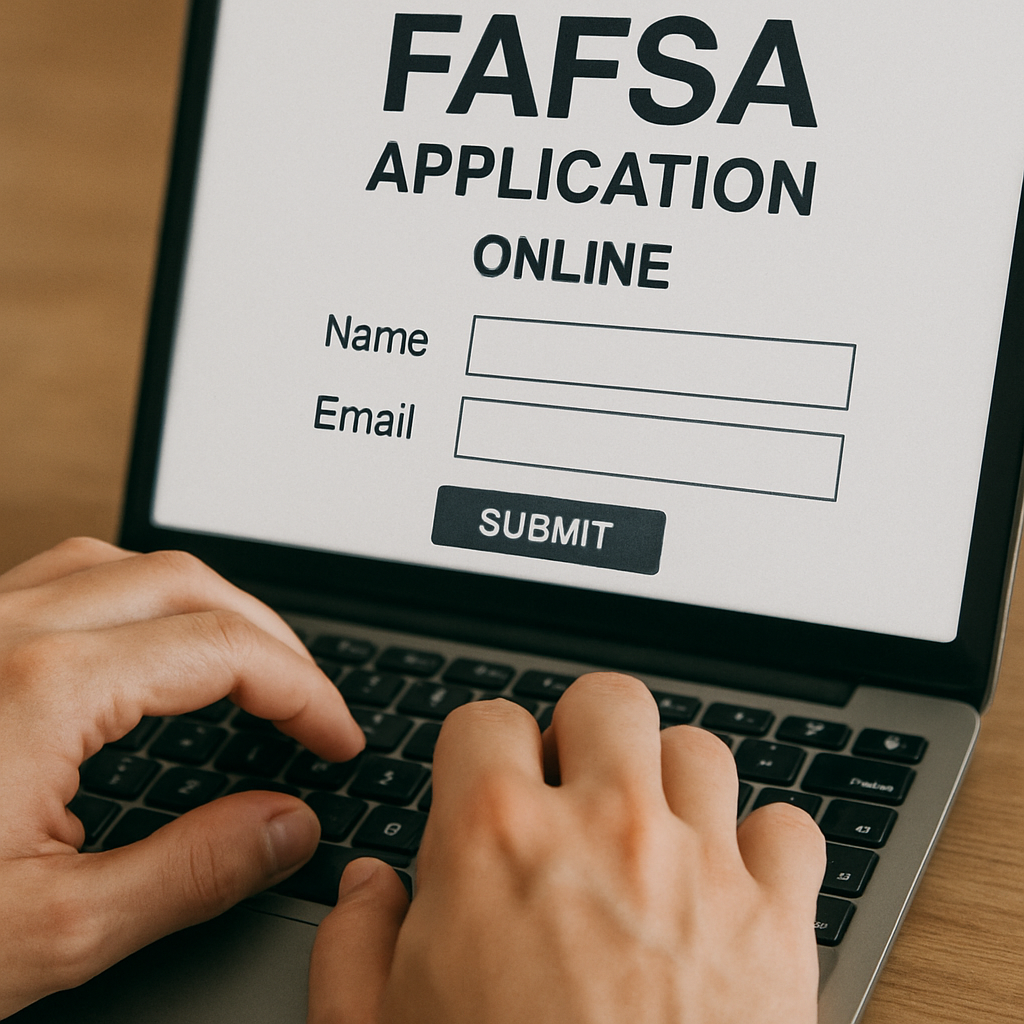
Before a parent can apply for this loan, the student must complete the FAFSA application for dependent undergraduates. Even if you believe your family earns too much to qualify for need-based aid, this form is mandatory. Schools use this standardized data to generate a financial aid package, which will outline your eligibility for what is commonly referred to as a FAFSA parent plus loan.
2. Complete the Application on StudentAid.gov
Once the FAFSA is processed and your child’s school has offered a PLUS loan as part of the financial aid package, you must formally apply. This is done on the official Federal Student Aid website using your own FSA ID (not your child’s).
Navigating Credit Checks and Denials
Unlike federal loans taken out by students, PLUS loans are not guaranteed simply by filling out the FAFSA. You must meet specific credit requirements for federal education borrowing. The government will perform a hard credit check to ensure you do not have an “adverse credit history.”
An adverse credit history typically includes recent bankruptcies, foreclosures, defaults, or accounts that are currently 90 or more days delinquent. If you are denied based on your credit report, you still have options:
- Find an Endorser: You can apply with a creditworthy co-signer.
- File an Appeal: You can navigate the adverse credit history appeal process if you can prove extenuating circumstances for your negative credit marks, or if the information on your credit report is incorrect.
- Additional Student Borrowing: If your application is denied and you cannot secure an endorser, your child may become eligible to take out additional unsubsidized federal student loans.
Breaking Down Costs: Limits, Fees, and Interest Rates
Understanding the true cost of borrowing is vital before signing the Master Promissory Note (MPN). Federal parent loans come with fixed terms, but they are generally more expensive than loans offered directly to undergraduate students.
Borrowing Limits
One of the most appealing (and potentially dangerous) aspects of this loan is the maximum borrowing limits for undergraduate education. Parents can borrow up to the total Cost of Attendance (COA) determined by the school, minus any other financial aid the student has already received.
- Actionable Tip: Just because you can borrow up to the full cost of attendance does not mean you should. Always calculate a realistic post-graduation budget to avoid over-borrowing.
Interest Rates and Fees
Direct PLUS interest rates are fixed for the life of the loan, but the exact rate changes annually for new loans disbursed after July 1st. Historically, these rates are noticeably higher than those for undergraduate Direct Loans.
Furthermore, you must account for federal loan origination fees. The Department of Education deducts a percentage of the loan amount before the funds are sent to the school. Currently, this fee hovers around 4.228%.
- Example: If you borrow $10,000, the origination fee will be roughly $422. This means only $9,578 will be sent to the school, but you are still responsible for repaying the full $10,000 plus interest.
Managing Your Debt: Repayment and Deferment
By default, repayment on a PLUS loan begins 60 days after the loan is fully disbursed. For many families, paying a large monthly bill while their child is still in school is simply unmanageable.
Fortunately, there are standard deferment options for parent borrowers. You can request to defer payments while your child is enrolled in school at least half-time, and for an additional six months after they graduate, leave school, or drop below half-time enrollment.
- Important Note: Interest will continue to accrue during this deferment period. When deferment ends, that accrued interest will capitalize (be added to your principal balance), which means you will end up paying interest on your interest.
Repayment Plans
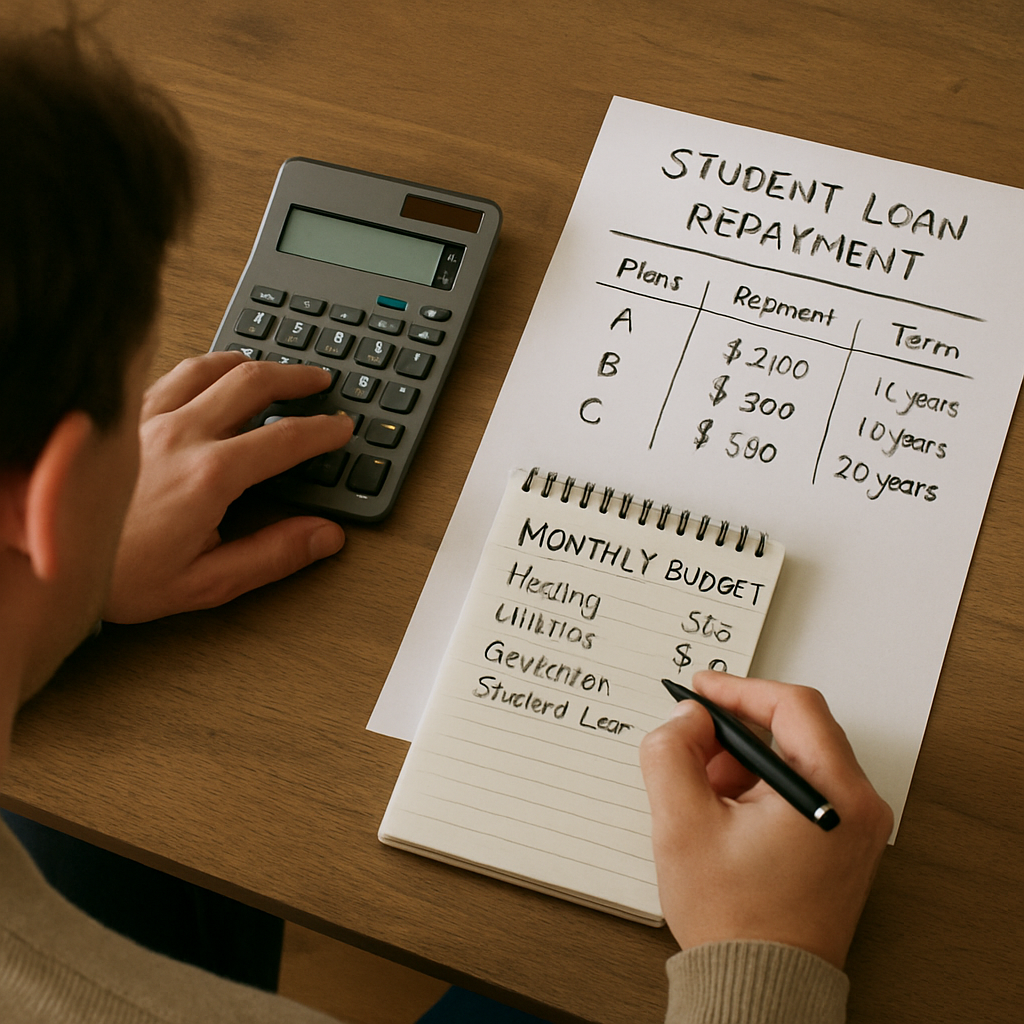
When it’s time to pay, you will automatically be placed on the Standard Repayment Plan, which divides your debt into fixed monthly payments over 10 years. Other options include Graduated Repayment (payments start low and increase every two years) and Extended Repayment (stretching the loan out up to 25 years to lower the monthly payment).
However, many parents struggle with these high monthly bills and look for income-driven solutions. By default, Parent PLUS loans are not eligible for most Income-Driven Repayment (IDR) plans. The only exception is Income-Contingent Repayment eligibility (ICR). To access the ICR plan—which caps your monthly payment at 20% of your discretionary income—you must first consolidate your PLUS loans into a Direct Consolidation Loan.
The Double Consolidation Loophole Strategy
For families seeking even lower monthly payments than the ICR plan offers, there is a complex but legal workaround known as the double consolidation loophole strategy.
Normally, when you consolidate a Parent PLUS loan, it is permanently “stained” with a marker that limits it to the ICR plan. However, if a parent has multiple PLUS loans, they can consolidate them into two separate Direct Consolidation Loans with two different servicers. Once those two new consolidation loans are processed, the parent consolidates those two loans together into a final, third Direct Consolidation Loan.
Because of the way the law is currently written, this final consolidation loan loses the PLUS loan “stain,” opening up access to the much more generous Saving on a Valuable Education (SAVE) plan, which can drastically reduce monthly payments.
- Urgent Warning: The Department of Education is actively closing this loophole. Parents must complete this complex student loan debt consolidation for parents before July 1, 2025, to take advantage of it.
Forgiveness, Relief, and Alternative Strategies
Parent borrowers often wonder if there are ways to have their debt forgiven or transferred. Here are the primary avenues for relief.
Public Service Loan Forgiveness (PSLF)
If you work for a government agency or a qualifying non-profit organization, you might be eligible for Public Service Loan Forgiveness for parents. Under PSLF, the remaining balance of your loan is forgiven after you make 120 qualifying monthly payments. To qualify, you must consolidate your Parent PLUS loan into a Direct Consolidation Loan and enroll in the ICR plan (or use the double consolidation loophole to access other IDR plans). Remember, PSLF eligibility is based on the parent’s employment, not the student’s.
Death and Disability Discharge
It is a grim topic, but families need to know what happens in the event of a tragedy. The federal government offers a death and disability discharge for federal loans. If the parent borrower dies or becomes totally and permanently disabled, the loan is fully discharged. Furthermore, if the student for whom the funds were borrowed passes away, the parent’s debt is also discharged.
Refinancing and Private Alternatives
Because the federal government does not allow you to legally transfer a Parent PLUS loan to your child, some families look to the private sector. Once the child has graduated and secured a stable income, you can explore refinancing parent debt into student name through a private lender.
If you take this route, the private lender pays off your federal loan, and issues a new private loan entirely in your child’s name. Before making this leap, you must carefully weigh federal student aid vs private student loans. Refinancing into a private loan means permanently surrendering all federal benefits, including access to income-driven repayment, generous deferment options, and potential federal forgiveness programs.
Conclusion
Taking on a parent plus loan is a massive financial commitment that requires careful foresight and planning. From understanding the initial FAFSA requirements to navigating credit checks, origination fees, and complex repayment strategies, being an informed borrower is your best defense against long-term financial hardship.
By familiarizing yourself with your deferment options, exploring consolidation strategies like the double consolidation loophole before it closes, and understanding the distinct differences between federal and private lending, you can help fund your child’s educational dreams without sacrificing your own financial stability. Always borrow conservatively, plan for repayment early, and continuously communicate with your loan servicer to keep your financial health on track.